Is Soy Good For You or Bad For You?
I've been drinking soy milk for years! After reading this article my beloved soy chai's are no more! See for yourself by clicking on this link. The article is excellent, I highly recommend you take the time to read it.
The Ploy of Soy
Wednesday, September 20, 2006


Thursday, September 07, 2006
Learning The Five Tibetans from a Book
Books from most recent:
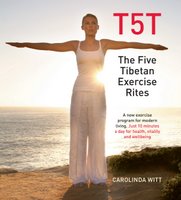

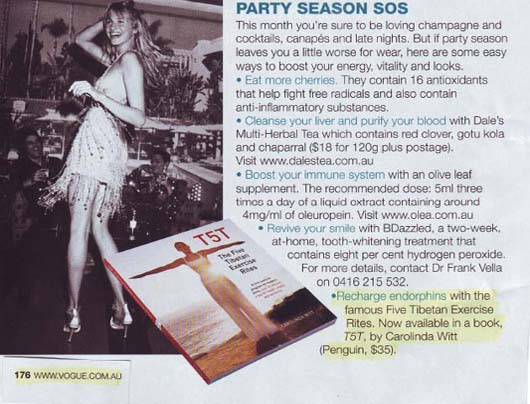
(a) T5T: The Five Tibetan Exercise Rites, (Penguin) & b) The 10-Minute Rejuvenation Plan (Random House) by Carolinda Witt. A modern 'manual' with core stability and breathing published 2006 & 2007 (204 photos, 176 pages)- having originally learnt and taught from the books above, I became very aware of their limitations as well as their benefits. I consulted with the health practitioners mentioned in (b) above. We 'took apart' each posture and found ways to keep the integrity intact, whilst eliminating the elements that could create injury. Core stability was added to protect the spine, and a step-by-step process to build strength from the inside out. Lots and lots of photographs of 'how to do each posture' are included, as well as 'how NOT to do each posture' - and all the common problems and solutions are included. A number of clinical studies have proven that how well you breathe can literally dictate your lifespan. Methods for natural full, deep, slow breathing is included in depth, and practised between each Rite. As the ancients understood the world in 5 elements, an element has been assigned to each Rite, to increase their metaphorical power. See previous post on this blog titled 'What is the difference between T5T and the Five Tibetan Rites' for further information.
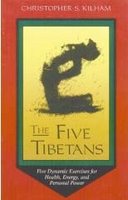
(b) The Five Tibetans, by Christopher Kilham. Kilham is a yoga teacher whose popular book has helped increase knowledge about the Rites. It was published in 1994 (14 photos, 84 pages) and gives a brief outline of the original story of the discovery of the Rites. True to the original text, his brief descriptions and photographs are similar to those of the original author, Peter Kelder. He also provides additional information, regarding the human energy system, kundalini, the chakras, breathing and meditation. Same as (b) above with regard to the postures.
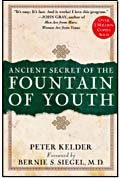
(c) Ancient Secret of The Fountain of Youth, by Peter Kelder. The updated version published in 1985 (18 photos, 105 pages)- updated and re-written by the same author as the original story, which includes an extra chapter on the 6th Rite previously omitted. The monks advise celibacy to practice the 6th Rite, so is only of use to those who are abstaining from sex. The text and the photographs are limited, and do not adequately convey the flowing movement of the Rites, nor do they tell you what NOT to do which is just as important. Some of the postures are also performed in a manner which (in the opinion of the physiotherapist, osteopaths, chiropractors, occupational health instructor, breathing expert, Feldenkrais and Pilates and other yoga teachers I have consulted) have the potential to cause lower back and neck strain/injury - in those with no training in the correct way of performing each movement - and those who are unfit - (most modern sedentary Westerners).
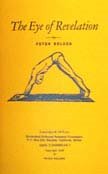
(d) The Eye of Revelation, by Peter Kelder. The original story published in 1939 (9 drawings, 30 pages) - tells the story of how Colonel Bradford discovered the monks who taught him the 'secret' of their youthfullness - and brings this knowledge back to the West. Good to read to learn the history of the Rites, but is very simplistic in terms of learning the postures
Here is a comment I received from my website (and my answer) which raises an interesting point.
Hi SON. This is for you to follow up with Carolinda and if you have further interest in undergoing this VERY USEFUL system and that takes less than 25 mins of your time but rejuvenates body-mind and soul. I am sure it will be convenient for you to visit a T5T centre; there is no substitute than to learn it from the exponent and to be a direct disciple. My personal experience tells me that SELFHELP BOOKS/CD's/DVD's are of very little help or frankly NO HELP at all. The technique of physically doing any exercise incuding the proper breathing is both a science as well as an art and the books etc. are compendium of information for reference but ONLY AFTER HAVING LEARNT IT IN THE PHYSICAL PRESENCE OF THE MASTER. This is, in my considered openion, a very fine art and if done inconjunction with PRANAYAM ( again a set of five breathing techniques) completes and does not need any thing else for perfectly heathy living and what I cal l"LIFE LIVED". You may continue with your GYM also, ift hat is a must - but all this should be done judiously and in consultation with your master and trainer.Take care and greetings...............DAD
Hi there!
Thanks for forwarding me your letter from your father. I'm glad he approves of the system, I certainly do!
Regarding his comments about learning from books etc - I would have to agree that in an ideal situation it is of course better to learn directly from a reputable and knowledgeable teacher, and then use the book as a source of ongoing information. However, this isn't always possible, and all yoga is good yoga - certainly better than no yoga at all! The key of course is the awareness and consciousness that it is practiced along with the yoga. That is a whole other subject.
I believe that the books on the Rites including mine, introduce a whole new group of people who would never attend a yoga class, due to poor self image or false expectations about it being religeous or having to be a vegetarian etc. Having taught so many people, I know that this is the case. Then there are others who can't afford the classes. The Rites are these people's introduction to a whole new world!
I believe the Rites make people better people - more powerful, self disciplined, less emotionally volatile and more conscious. The more people who do them the better - it all contributes to a better, more peaceful world.
I am reminded of the ancient masters who did not have books or other teachers to learn from, who developed these movements in response to their inner guidance and self-healing. In the same way, it is entirely possible for someone who has learnt from books/CD's etc to gain degrees of self-awareness that is generated from within themselves.
Regretably, we only have the original manuscript regarding the Rites, and no Tibetan Lama to teach us. Without the books, this wonderful system would have totally disappeared from our world - too great a loss!
Books have replaced the oral traditions of the past - they are people's desire to record the knowledge and wisdom they have discovered for the use of future generations. It is a noble desire.
The knowledge contained within books has been considered so dangerous in the past, that several rulers have tried to burn and destroy them.I think we have to read and have access to knowledge so that we can take it to new levels. The world cannot stay still!
Best regards,Carolinda
If you wish to publish this article for your website - you may do so, provided you assign the correct copyright and accreditation exactly as shown below:
Copyright (c) 2006 Carolinda Witt - author T5T - The Five Tibetan Exercise Rites (Penguin) and The 10-Minute Rejuvenation Plan (Random House)
Books from most recent:

(a) T5T: The Five Tibetan Exercise Rites, (Penguin) & b) The 10-Minute Rejuvenation Plan (Random House) by Carolinda Witt. A modern 'manual' with core stability and breathing published 2006 & 2007 (204 photos, 176 pages)- having originally learnt and taught from the books above, I became very aware of their limitations as well as their benefits. I consulted with the health practitioners mentioned in (b) above. We 'took apart' each posture and found ways to keep the integrity intact, whilst eliminating the elements that could create injury. Core stability was added to protect the spine, and a step-by-step process to build strength from the inside out. Lots and lots of photographs of 'how to do each posture' are included, as well as 'how NOT to do each posture' - and all the common problems and solutions are included. A number of clinical studies have proven that how well you breathe can literally dictate your lifespan. Methods for natural full, deep, slow breathing is included in depth, and practised between each Rite. As the ancients understood the world in 5 elements, an element has been assigned to each Rite, to increase their metaphorical power. See previous post on this blog titled 'What is the difference between T5T and the Five Tibetan Rites' for further information.
(b) The Five Tibetans, by Christopher Kilham. Kilham is a yoga teacher whose popular book has helped increase knowledge about the Rites. It was published in 1994 (14 photos, 84 pages) and gives a brief outline of the original story of the discovery of the Rites. True to the original text, his brief descriptions and photographs are similar to those of the original author, Peter Kelder. He also provides additional information, regarding the human energy system, kundalini, the chakras, breathing and meditation. Same as (b) above with regard to the postures.
(c) Ancient Secret of The Fountain of Youth, by Peter Kelder. The updated version published in 1985 (18 photos, 105 pages)- updated and re-written by the same author as the original story, which includes an extra chapter on the 6th Rite previously omitted. The monks advise celibacy to practice the 6th Rite, so is only of use to those who are abstaining from sex. The text and the photographs are limited, and do not adequately convey the flowing movement of the Rites, nor do they tell you what NOT to do which is just as important. Some of the postures are also performed in a manner which (in the opinion of the physiotherapist, osteopaths, chiropractors, occupational health instructor, breathing expert, Feldenkrais and Pilates and other yoga teachers I have consulted) have the potential to cause lower back and neck strain/injury - in those with no training in the correct way of performing each movement - and those who are unfit - (most modern sedentary Westerners).
(d) The Eye of Revelation, by Peter Kelder. The original story published in 1939 (9 drawings, 30 pages) - tells the story of how Colonel Bradford discovered the monks who taught him the 'secret' of their youthfullness - and brings this knowledge back to the West. Good to read to learn the history of the Rites, but is very simplistic in terms of learning the postures
Here is a comment I received from my website (and my answer) which raises an interesting point.
Hi SON. This is for you to follow up with Carolinda and if you have further interest in undergoing this VERY USEFUL system and that takes less than 25 mins of your time but rejuvenates body-mind and soul. I am sure it will be convenient for you to visit a T5T centre; there is no substitute than to learn it from the exponent and to be a direct disciple. My personal experience tells me that SELFHELP BOOKS/CD's/DVD's are of very little help or frankly NO HELP at all. The technique of physically doing any exercise incuding the proper breathing is both a science as well as an art and the books etc. are compendium of information for reference but ONLY AFTER HAVING LEARNT IT IN THE PHYSICAL PRESENCE OF THE MASTER. This is, in my considered openion, a very fine art and if done inconjunction with PRANAYAM ( again a set of five breathing techniques) completes and does not need any thing else for perfectly heathy living and what I cal l"LIFE LIVED". You may continue with your GYM also, ift hat is a must - but all this should be done judiously and in consultation with your master and trainer.Take care and greetings...............DAD
Hi there!
Thanks for forwarding me your letter from your father. I'm glad he approves of the system, I certainly do!
Regarding his comments about learning from books etc - I would have to agree that in an ideal situation it is of course better to learn directly from a reputable and knowledgeable teacher, and then use the book as a source of ongoing information. However, this isn't always possible, and all yoga is good yoga - certainly better than no yoga at all! The key of course is the awareness and consciousness that it is practiced along with the yoga. That is a whole other subject.
I believe that the books on the Rites including mine, introduce a whole new group of people who would never attend a yoga class, due to poor self image or false expectations about it being religeous or having to be a vegetarian etc. Having taught so many people, I know that this is the case. Then there are others who can't afford the classes. The Rites are these people's introduction to a whole new world!
I believe the Rites make people better people - more powerful, self disciplined, less emotionally volatile and more conscious. The more people who do them the better - it all contributes to a better, more peaceful world.
I am reminded of the ancient masters who did not have books or other teachers to learn from, who developed these movements in response to their inner guidance and self-healing. In the same way, it is entirely possible for someone who has learnt from books/CD's etc to gain degrees of self-awareness that is generated from within themselves.
Regretably, we only have the original manuscript regarding the Rites, and no Tibetan Lama to teach us. Without the books, this wonderful system would have totally disappeared from our world - too great a loss!
Books have replaced the oral traditions of the past - they are people's desire to record the knowledge and wisdom they have discovered for the use of future generations. It is a noble desire.
The knowledge contained within books has been considered so dangerous in the past, that several rulers have tried to burn and destroy them.I think we have to read and have access to knowledge so that we can take it to new levels. The world cannot stay still!
Best regards,Carolinda
If you wish to publish this article for your website - you may do so, provided you assign the correct copyright and accreditation exactly as shown below:
Copyright (c) 2006 Carolinda Witt - author T5T - The Five Tibetan Exercise Rites (Penguin) and The 10-Minute Rejuvenation Plan (Random House)
Thursday, August 31, 2006

What Is The Difference Between T5T and The Five Tibetan Rites?
The Five Tibetan Rites of Rejuvenation were brought to the West in the late 1930’s by a Westerner who went under the pseudonym of Colonel Bradford. The story of his experience and the instructions he received from the Tibetan Lamas were recorded by the writer Peter Kelder who published the original manuscript titled ‘The Eye of Revelation’ in 1939. This book was later updated and republished in 1985 under the name ‘Ancient Secret of the Fountain of Youth’.
I learnt The Five Tibetan Rites from a teacher who had learnt them from another teacher - who had in turn learnt them from Peter Kelder’s manuscripts.
I worked with my teacher for a while (who taught the original method) and noticed a recurring pattern of people developing lower back and neck pain.
It is important now to describe here, the type of people who were attending our workshops:
· Most had never done yoga before, and were attracted to the Rites for their anti- aging, energy raising benefits.
· Came to improve their flexibility (meaning they were not flexible to begin with)
· Wanted to strengthen their backs to reduce back ache or to rehabilitate after injury
· Were largely sedentary, doing little to no exercise
· Wanted something to help them feel more motivated and purposeful
There were also people who did yoga or other exercise, but were time poor and wanted something they could fit into their busy days.
Our modern western lifestyle is very different to that of the monks. They lived in the steep Himalayas, and would have had to be fit to walk up and down those mountains! Their food production, preparation and day to day tasks would have kept them physically active. Since the Rites were part of their daily practice, they probably started practicing them at a very early age.
If you compare their lifestyle to our own, you will clearly see that our bodies are under utilised. Because most of our tasks are repetitive, the same muscles get used in the same range of motion day after day. Other muscles become slack and underdeveloped from lack of use. The net result is that we rarely challenge our muscles, resulting in a reduced range of motion and mobility. A good example of this is when you watch older people trying to reverse their cars, who can’t turn their heads fully! Who wants to get like that? This situation is not an inevitable factor of aging; it is a lifetime pattern of not stretching and strengthening your body. For example; how often do you arch your upper back and neck backwards? In contrast, how many tasks in your day involve you bending forwards?
As our commonly used muscles get stronger and our under utilised muscles get weaker, we land up with imbalances in our bodies that over time are inevitably going to decrease our strength and flexibility. This makes us more prone to injury.
Knowing this, I decided to take these ancient movements to the very people who help rehabilitate those who have been injured – and teach them how to move correctly to prevent future injury. I consulted with physiotherapists, osteopaths, chiropractors; an occupational health therapist, breathing expert, Feldenkrais Instructor & Pilates Teacher. They all made suggestions which I tried out in the living laboratory of my classrooms. It was the trial and error ‘experiments’ in my workshops that ultimately evolved the flowing sequence that is now T5T.
Whilst there are changes to the original Rites, the integrity and outcome of this ancient practice remains intact. Before I expand upon the changes, let’s get clear on the purpose of the Rites as described by Colonel Bradford in “The Eye of Revelation”.
“The first important thing I was taught after entering the Lamasery,’ he began, “was this: The body has seven centres, which, in English, could be called Vortexes. These are kind of magnetic centres. They revolve at great speed in the healthy body, but when slowed down – well that is just another name for old age, ill health and senility.
“These spinning centres of activity extend beyond the flesh in the healthy individual, but in the old, weak, senile person they hardly reach the surface, except in the knees. The quickest way to regain health, youth, and vitality is to start these magnetic centres spinning again. There are but five practices that will do this. Any one of them will be helpful, but all five are required to get glowing results. These five exercises are really not exercises at all, in the physical culture sense. The Lamas think of them as ‘Rites’ and so instead of calling them exercises or practices, we too, shall call them ‘Rites’.
He says that when all the vortexes (chakras) are ‘revolving at high speed and at the same rate of speed, the body is in perfect health. When one or more of them slow down old age, loss of power and senility set in.’
The changes I have made to the original routine, do not adversely affect the spin rate of the chakras – the whole purpose of performing the Rites. They do however; significantly improve the physical aspects of the movements, making them safer for just about everyone to perform. Here are the main differences between T5T and the original Rites.
1. Addition of Core Stability: In T5T you develop strength from the inside out, through the use of core stability methods which have been added to each Rite. The deep postural muscles of the lower abdomen need to be strengthened to wrap around and protect your spine when you move. Most people are completely unaware of these muscles and the major role they play in stabilising the spine – thereby preventing injury.
The core muscles also play a role in another familiar part of aging – incontinence! By doing T5T you can prevent this. One of our students, a lady in her late 60’s was incontinent for five years. She had been attending a well regarded local Pilates Teacher’s class for around 18 months. After 3 weeks of doing T5T, it became totally unnecessary for her to wear pads, or to protect her bed with extra towels at night! You can see her Testimonial on our website http://www.t5t.com/
2. Series of Steps: To build up the strength of the core stability muscles, T5T includes a series of steps that take you from beginner level through to intermediate and advanced. These steps assist the core muscles to develop by building strength progressively. You need strength to hold you in a posture in the correct alignment and control before you start developing flexibility.
3. Keeps the Neck Long and Strong: In the original Rite No 3 – The Kneeling Backbend, the neck is not kept long (lengthened) and strong. In some people this can occlude (kink) the vertebral artery, resulting in reduced blood flow to the brain. Some people can become dizzy or at worst suffer a temporary loss of consciousness. In T5T the neck is not collapsed all the way back, but kept long and strong.
4. Focuses on Correct Alignment: In the original Rite No 3 – The Kneeling Backbend, a man is shown leaning back on the thighs instead of keeping his hipbone above his knee bone in correct postural alignment. This causes pressure on the joints of the knee and hip. In T5T you are taught to stabilise yourself in a correctly aligned position using core muscles and firmed buttocks. There are other examples of improper alignment in the other Rites that are rectified by T5T.
5. Does Not Collapse The Lumbar Spine: In T5T we focus on the stiffest part of the spine – the thoracic (upper/mid back) area. This is the area most affected by our forwards bending lifestyle. Dowagers hump is an extreme example of this. The original text shows extensive bending in the lumbar spine. This compresses the lumbar vertebrae and discs and is not suitable for anyone with any potential to injury.
6. Prevents Using the Momentum of the Movement: In T5T the movements are controlled and protected by the use of core stability, and the firming of various muscle groups. In the original Rites there is a tendency to swing in and out of postures – and is most unsafe during the 5th Rite as you transit from the upside down V position into the upward dog/plank like posture. T5T provides solutions to avoid this.
7. Addition of Energy Breathing: The original text mentions taking two deep breaths between each Rite and that’s it. Most people don’t know how to correctly take a deep breath, even if they think they do! T5T includes three special breaths between each Rite which deepens your breathing, expands your breathing capacity, slows down your breathing rate and makes you more conscious of the way you breathe in all situations. Several clinical studies have shown that how well you breathe literally indicates the length of your lifespan!
8. Common Problems & Solutions: The original text gives limited information on modifications or adaptations if you are unable to start doing the Rites exactly as described. It also gives very little information on what NOT to do. T5T is the result of the experience of over 700 students and 25 Instructors, and shares this knowledge through workshops, private tuition, corporate training and the books, T5T - The Five Tibetan Exercise Rites (Penguin) and The 10 Minute Rejuvenation Plan (Random House).
If you wish to publish this article for your website or use the T5T name for each Rites with their associated affirmation - you may do so - provided you assign the correct copyright and accreditation exactly as shown below:
Copyright (c) 2006 Carolinda Witt - author T5T - The Five Tibetan Exercise Rites (Penguin) and The 10-Minute Rejuvenation Plan (Random House)
Thursday, August 24, 2006
Five Tibetan Rites - Should you Nose or Mouth Breathe?
Here is the dialogue regarding breathing and The 5 Tibetans that came from someone who wrote to me from my website. I thought it might be useful for others with similar queries.
There is a point I want to make: There seems to be some confusion about the breathing pattern to be adopted. In the first rite, does one breathe during the swirling? I can do all the five 21 times in 5 minutes if I want to, but I take 10 minutes. So I can do the first rite in one breath - is that okay??
Hi... Are you holding your breath throughout the Spin? The breath assists the flow of energy throughout your body. I think you are sensing this. Let the breath be free. Breathe through the nose. At the beginning of the movement, breathe once to remind you to breathe and then let the breathing be normal/natural throughout the movement. When you hold your breath you are restricting the vitality that can enter your body, and restricting the wastes that can leave your body. Breathe fully and freely.
thanks. a few more queries.
* is it okay to inhale through the nose and exhale thorugh the mouth?
No. You should breathe only through the nose. If you breathe through the mouth you lose and gain too much air too quickly. This can upset the carbon dioxide/oxygen ratio in the body, causing mild to strong hyperventilation depending how long and intensely you do it for. The nose is designed for breathing. The nose is the first line of defence, warning you of harmful smells, and trapping and filtering out particles and bacteria.
There are a lot of different views about breathing. We need to exercise our breathing muscles (diaphragm, intercostal rib muscles etc) just like we exercise the rest of our body. What you don't use - you lose! This is like breaking an arm and having a cast put around it. When the cast is taken off, all the muscles have wasted (atrophy) away and need to be built up again gradually. If your breathing muscles and lungs have not been used fully for a while, it will take some time to build their strength back up again.
Breathing exercises should done without straining and blowing yourself up like a balloon. If you started lifting weights to build muscles, you would not lift the heaviest weight first - you would start with low weights and gradually build up repetitions, and then gradually increase the weight to achieve your objective.
I consulted Michael Grant White the 'breathing coach' from the US who helped me develop the breathing philosophy and Energy Breathing method in T5T. It is worth you looking up his website breathing tests on there.
Here is his testimonial for my method which is outlined in my book 'T5T - The Five Tibetan Exercise Rites':
"Breathing slower, deeper and easier is vital for longevity, health and vitality. I believe that T5T can help most people become more conscious of their breathing. It can also release tension in their breathing, and often gradually expand their breathing capacity as well as slow their breathing rate. T5T will help many people to achieve the above, however there are those who may have an undetected dysfunctional breathing or what I call UDB whose next step would be my Optimal Breathing Techniques." Michael Grant White, “The Breathing Coach” - Executive Director of www.breathing.com and the Optimal Breathing School
Breathing well is incredibly important, because a number of clinical studies have proven that how well you breathe is literally an indicator of how long you will live.
* Is it okay to do the sixth tibetan and have an active sex life as well?
If you have an excess of sexual energy, (or have no-one to share it with) it could be useful to restore balance. Colonel Bradford says that it is necessary to be celibate (no sex) to practice this Rite. The idea being that the sexual energy is then redirected into the other energy centres of the body, for more spiritual purposes.
* I normally do the 6 tibetans and then follow up with some stretching and other free arm exercises. The whole thing takes just 20 minutes. the idea is to remain strong and vital.
Sounds great. Any yoga is good yoga. You might want to consider a twisting type exercise as this is not included in the Rites. The Rites are brilliant for what they are intended for - to get the chakras spinning rapidly and evenly again, so that life-energy can be distributed through all the energy lines of the body and into every single cell. They are also very physically balancing, as each movement needs to be performed so that the weight of the body is balanced evenly between the right and left side of the body and the centre of gravity found between hands and feet etc.
I live in india -it's a poor and corrupt country raging with epidemics, and there's huge work and life stress - so I also need to keep stress induced blood pressure in control and remain healthy by keeping my immunity levels in top gear.
The breathing exercises can really help restore calm, and slow down your breathing rate. A rapid breathing rate, that is shallow in the upper chest stimulates the sympathetic nervous system associated with 'flight or fight'. Breathing slowly and deeply using the belly, stimulates the parasympathetic nervous system associated with 'rest and relaxation'.
Will appreciate exercise and diet tips. have been doing this for a decade with good results but there is so much to learn all the time and so much fine tuning to do for optimum results. i can see that you are an expert or "ustad" as we call the know-alls here.
I have added your email to my newsletter list so that you can receive lifestyle tips on all things related to health and well-being.
Here is the dialogue regarding breathing and The 5 Tibetans that came from someone who wrote to me from my website. I thought it might be useful for others with similar queries.
There is a point I want to make: There seems to be some confusion about the breathing pattern to be adopted. In the first rite, does one breathe during the swirling? I can do all the five 21 times in 5 minutes if I want to, but I take 10 minutes. So I can do the first rite in one breath - is that okay??
Hi... Are you holding your breath throughout the Spin? The breath assists the flow of energy throughout your body. I think you are sensing this. Let the breath be free. Breathe through the nose. At the beginning of the movement, breathe once to remind you to breathe and then let the breathing be normal/natural throughout the movement. When you hold your breath you are restricting the vitality that can enter your body, and restricting the wastes that can leave your body. Breathe fully and freely.
thanks. a few more queries.
* is it okay to inhale through the nose and exhale thorugh the mouth?
No. You should breathe only through the nose. If you breathe through the mouth you lose and gain too much air too quickly. This can upset the carbon dioxide/oxygen ratio in the body, causing mild to strong hyperventilation depending how long and intensely you do it for. The nose is designed for breathing. The nose is the first line of defence, warning you of harmful smells, and trapping and filtering out particles and bacteria.
There are a lot of different views about breathing. We need to exercise our breathing muscles (diaphragm, intercostal rib muscles etc) just like we exercise the rest of our body. What you don't use - you lose! This is like breaking an arm and having a cast put around it. When the cast is taken off, all the muscles have wasted (atrophy) away and need to be built up again gradually. If your breathing muscles and lungs have not been used fully for a while, it will take some time to build their strength back up again.
Breathing exercises should done without straining and blowing yourself up like a balloon. If you started lifting weights to build muscles, you would not lift the heaviest weight first - you would start with low weights and gradually build up repetitions, and then gradually increase the weight to achieve your objective.
I consulted Michael Grant White the 'breathing coach' from the US who helped me develop the breathing philosophy and Energy Breathing method in T5T. It is worth you looking up his website breathing tests on there.
Here is his testimonial for my method which is outlined in my book 'T5T - The Five Tibetan Exercise Rites':
"Breathing slower, deeper and easier is vital for longevity, health and vitality. I believe that T5T can help most people become more conscious of their breathing. It can also release tension in their breathing, and often gradually expand their breathing capacity as well as slow their breathing rate. T5T will help many people to achieve the above, however there are those who may have an undetected dysfunctional breathing or what I call UDB whose next step would be my Optimal Breathing Techniques." Michael Grant White, “The Breathing Coach” - Executive Director of www.breathing.com and the Optimal Breathing School
Breathing well is incredibly important, because a number of clinical studies have proven that how well you breathe is literally an indicator of how long you will live.
* Is it okay to do the sixth tibetan and have an active sex life as well?
If you have an excess of sexual energy, (or have no-one to share it with) it could be useful to restore balance. Colonel Bradford says that it is necessary to be celibate (no sex) to practice this Rite. The idea being that the sexual energy is then redirected into the other energy centres of the body, for more spiritual purposes.
* I normally do the 6 tibetans and then follow up with some stretching and other free arm exercises. The whole thing takes just 20 minutes. the idea is to remain strong and vital.
Sounds great. Any yoga is good yoga. You might want to consider a twisting type exercise as this is not included in the Rites. The Rites are brilliant for what they are intended for - to get the chakras spinning rapidly and evenly again, so that life-energy can be distributed through all the energy lines of the body and into every single cell. They are also very physically balancing, as each movement needs to be performed so that the weight of the body is balanced evenly between the right and left side of the body and the centre of gravity found between hands and feet etc.
I live in india -it's a poor and corrupt country raging with epidemics, and there's huge work and life stress - so I also need to keep stress induced blood pressure in control and remain healthy by keeping my immunity levels in top gear.
The breathing exercises can really help restore calm, and slow down your breathing rate. A rapid breathing rate, that is shallow in the upper chest stimulates the sympathetic nervous system associated with 'flight or fight'. Breathing slowly and deeply using the belly, stimulates the parasympathetic nervous system associated with 'rest and relaxation'.
Will appreciate exercise and diet tips. have been doing this for a decade with good results but there is so much to learn all the time and so much fine tuning to do for optimum results. i can see that you are an expert or "ustad" as we call the know-alls here.
I have added your email to my newsletter list so that you can receive lifestyle tips on all things related to health and well-being.
Wednesday, August 23, 2006

The Five Tibetans - Should you practice when you are menstruating?
I received this query on my website, and thought it would be of use to others interested in the same question.
Can girls/women practice T5T during periods? Or should we break during those five to six days. Please advise.
The monks who practiced the original Rites would have been celibate and left no instructions for women!
However, my experience and the feedback of many of the women I have taught is that T5T seems to improve the symptons of menstruation. Some women report less bloating, moodiness, anxiety, cramps and sore breasts. Others say they feel less conjested and the flow is improved. I believe that because you are doing a little bit of yoga & core training (T5T) everyday - your body becomes conditioned to it - and you benefit from the cummulative effects of regular practice.
During menstruation some women's physical energy is not as strong as usual. In this case - maintain the pattern of your practice so as not to lose the motivation of the daily ritual - but perhaps to do less repetitions, or revert back to one of the easier versions of the postures. However, some women experience increased energy during their period - so there is no one size answer to fit all! At the top end of performance, whatever the time of month - think of all the female Olympic athletes!
Exercise is good for you, and in fact is normal! Our sedentary lifestyle has turned exercise into an option! Certainly if you have a condition that requires you to receive treatment from a doctor - you should definately discuss this with him/her. If you are exercising so much that your period stops, then that is not healthy. You would have to be working out at very high intensity for this to occur from exercise alone.
What I have observed both personally and with all my students, is that the Rites help stabilise the periods. I have not had one report of increased blood flow or stopping of menstruation through practicing the Rites. What I do hear about is people saying that they are less moody, have less cramps and reduced bloating - but maintain a craving for chocolate!!!
The monks said that the purpose of the Rites is to get the chakras (energy centres) of the body spinning rapidly and evenly again. The chakras are located above major nerve plexi (bunches of nerves) and the major endocrine glands of the body. In this way, they are said to improve hormonal function.
As an example of this hormonal stimulation, I taught one women who reported an increase in the production of her breast milk!
Personally I share the opinion of Barbara Benagh - a yoga teacher, seminar teacher and columnist on Yoga Journal http://www.yogajournal.com/practice/546_1.cfm who says,
Since I know of no studies or research that makes a compelling argument to avoid inversions during menstruation, and since menstruation affects each woman differently and can vary from cycle to cycle, I am of the opinion that each woman is responsible for making her own decision.
The bottom line is that hatha yoga is full of contradictions and varied opinions, leaving each of us ultimately responsible for our own choices. Pay attention to your body and discover what works and what doesn't — not just during your period but every day.
Geeta Iyengar (yoga expert) http://www.yogaholidays.net/magazine/Menstruation.html says that the practice of Uddiyana Bhanda (the 6th Rite) should not be done during menstruation. I do not incorporate the 6th Rite in any of my teachings as the monks said you must be celibate to practice it. They channeled their sexual energy up the major energy lines of the body for heightened spiritual awareness.
Wednesday, August 16, 2006

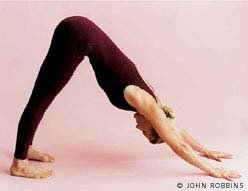
Tibetan 5th Rite - Should the heals touch the floor?
The picture on the top is from the book T5T: The Five Tibetan Exercise Rites (Penguin)
The picture above left is from http://www.yogajournal.com/poses/491_1.cfm - there is a great article on this pose known as Downward Dog on their website.
My name is Evgenie. I from Moscow. I badly know English language and I use the translator. Thanks for the answer. At me to you it is a lot of questions! I am engaged in the Eye of Revival 3 years. Results very good.
I have a book on Oka of Revival from 1939. In it{her} on a picture in the fifth ritual action the heel of a leg{foot} does not concern{touch} a floor! I shall send you this book. You likely know there is still a book author Christopher Kilhem Pjat Tibetsky Zhemchuzhin, in it{her} too in the fifth ritual action the heel of a leg{foot} of a floor does not concern{touch}! Here to me it is not clear whence at you the information, what the heel should concern{touch} a floor? For me it is very important!!!! Tell the book which I have sent you from 1939 Eye of Revival really original?
What book is used by you? You have an original the Eye of Revival?
Further we look the book from 1939 that it for a sound me-me-me? It is a mantra the OHM???
At what age it is possible to practise 6 ritual action? Whether there Are restrictions for practice 6 ritual actions? Christopher Kilhem writes that for practice 6 ritual actions it is possible to conduct a sexual life. In the book 1939 it is written that it is impossible! What do you think?
Excuse many questions has collected, on which it is necessary to receive answers. For me it is very important!!!
Thanks.
Hi Evgenie, I have the original book "Eye of Revelation" and you are correct, the heal of the foot does not touch the floor in their illustrations. However, this posture known today as "downward dog" is very old and would have originally come from India into Tibet. Today, the ideal version of this pose is considered to be when your heals are touching the floor. Ideally in this pose, your weight should be evenly balanced between your hands and legs with your tailbone pointing to the sky. If you can get your heals to touch the floor it is very beneficial because it stretches the hamstring muscles at the back of the legs. Beginners in particular are often unable to put the heals of the feet on the floor.
Whether you can put your heals on the floor or not - you will still gain the energetic benefits of the posture as described by the monks. The Five Rites are intended to improve the distribution of life-energy through the body by stimulating the chakras to spin more rapidly – rather than focusing on stretching to the muscles of the body.
To answer your question regarding the 6th Rite - the monks said that the purpose of the 6th Rite is to channel the sexual energy up the major energy lines of the body for heightened spiritual purposes. The monks lived a celibate lifestyle abstaining from sex. Of course today this is a matter of personal choice. Colonel Bradford says in the book that this breathing method can also be used if you have an excess of sexual energy. Pranayama (breathing techniques) can be very powerful and bring about changes in the body and emotionally that some people are not ready for. For this reason it is best to study pranayama under the guidance of a qualified and experienced teacher. Best wishes - Carolinda
Tuesday, July 25, 2006
The Five Tibetans and The Five Elements
Extract from book T5T - The Five Tibetan Exercise Rites
At the time of the development of the Five Tibetan Rites of Rejuvenation, the ancients believed that their world was composed of Five Elements; water, earth, air, fire and spirit (energy). In psychology the Five Elements are used to personify different human traits, such as the personality types categories by Carl Jung (feeling, sensing, intuiting, and thinking) and those associated with the astrological signs of the zodiac. I experimented with the concept of assigning an element to each of the Rites, and found the results to be amazing.
In each case, the physcial movement of the Rite was a metaphor for what we were trying to achieve mentally - awareness in a different aspect of life. For example the Spin takes the element energy, and the vortex that the movements create allows you to replenish your body from the larger energy all around us. The Tabletop takes the eleement earth, and its movements focus on stability, foundation and balance, giving us a solid base from which to form new ideas.
In holistic exercise it can sometimes be hard to marry the physical state with the mental state, and having a metaphor helps people enormously to align the two, and to present a clear picture of what they are working towards.
Having assigned an element and a modern name to each Rite, I then experimented with creating an affirmation that expressed the 'energy' of each movement. The result is a method of reinforcing and focusing upon the positive benefits of each Rite physically, mentally and spiritually. This has a ripple effect on every area of your life.
Rite No 1 - The Spin - I am full of energy
Rite No 2 - The Leg Raise - My mind is clear and calm
Rite No 3 - The Kneeling Backbend - I am flexible and receptive
Rite No 4 - The Tabletop - I am strong and balanced
Rite No 5 - The Pendulum - I am positive and motivated
If you wish to publish this article on your website or use the the modern name for each Rites with their associated affirmation - you may do so - provided you assign the correct copyright and accreditation exactly as shown below:
Copyright (c) 2005 Carolinda Witt - author T5T - The Five Tibetan Exercise Rites and The 10-Minute Rejuvenation Plan
Wednesday, July 12, 2006
Keeping Motivated to do your Tibetan Five Rites
A recent survey of people who learnt the 5 Rites around 2 to 3 years ago, shows that there are some who wouldn't miss a day - others who do them when they can - others who sort of stop and start their practice - and finally those who stopped within a month of learning them.
It would be interesting to see if that pattern ie. a stop and start pattern occurs not just whilst doing the Rites, but in other areas of their lives too. How life changing a discovery it could be, if someone were to discover that they do the same thing everywhere else!!!
A recent survey of people who learnt the 5 Rites around 2 to 3 years ago, shows that there are some who wouldn't miss a day - others who do them when they can - others who sort of stop and start their practice - and finally those who stopped within a month of learning them.
It would be interesting to see if that pattern ie. a stop and start pattern occurs not just whilst doing the Rites, but in other areas of their lives too. How life changing a discovery it could be, if someone were to discover that they do the same thing everywhere else!!!
Saturday, April 22, 2006
Origins of The Tibetan 5 Rites?
There is an interesting discussion about the origins of The Five Tibetan Rites on the E-sangha Buddhist Forum Website - check it out. Since most of the Tibetan monasteries have been either raised to the ground or their ancient texts and lineages hidden, it has so far been impossible to trace the actual source of The Five Tibetan Rites of Rejuvenation. There are some interesting posts and discussions on this forum about their lineage.
Other posts on this site refer to the strenous nature of the Rites. I agree that the original text does not make allowances for the modern largely sedentary Westerner. This is exactly why I worked with many health practitioners to find ways to modify and adapt them so they would be achievable for many more people. These ideas and methods have worked well, with all kinds of people now doing the Rites successfully and having some amazing results. If you want to see what sort of results people are having, have a look at their stories.
There is an interesting discussion about the origins of The Five Tibetan Rites on the E-sangha Buddhist Forum Website - check it out. Since most of the Tibetan monasteries have been either raised to the ground or their ancient texts and lineages hidden, it has so far been impossible to trace the actual source of The Five Tibetan Rites of Rejuvenation. There are some interesting posts and discussions on this forum about their lineage.
Other posts on this site refer to the strenous nature of the Rites. I agree that the original text does not make allowances for the modern largely sedentary Westerner. This is exactly why I worked with many health practitioners to find ways to modify and adapt them so they would be achievable for many more people. These ideas and methods have worked well, with all kinds of people now doing the Rites successfully and having some amazing results. If you want to see what sort of results people are having, have a look at their stories.
Monday, March 27, 2006
 The Five Tibetans Rite No 1 (The Spin ) - Which Direction Should We Spin
Colonel Bradford's book 'The Eye of Revelation' (download it free here) only gives instructions to spin in a clockwise direction.
…“The first Rite”, continued the Colonel, “is a simple one. It is for the express purpose of speeding up the Vortexes. When we were children we used it in our play. It is this: Stand erect with arms outstretched, horizontal with the shoulders. Now spin around until you become slightly dizzy. There is only one caution: you must turn from left to right. In other words, if you were to place a clock or watch on the floor face up, you would turn in the same direction the hands are moving.”…
Please note that Colonel Bradford defines "clockwise" as being the direction in which the person is turning when facing forwards and turning from left to right; regardless of his/her location on the planet.
Since Bradford's location was in the Northern Hemisphere when he wrote that 'you should turn from left to right' ( in a clockwise direction) - some people have questioned whether we should change his instructions and spin anti-clockwise in the southern hemisphere.
When I asked them, "Why do you think we should change the direction of the spin?"
The answer is normally along the lines of, "Well water spins anti-clockwise in the southern hemisphere and clockwise in the northern hemisphere."
However this concept itself is based on a popular myth, and is therefore not a viable reason as to why we should change our spin direction in the southern hemisphere.
Alistair B. Fraser, Ph.D. Emeritus Professor of Meteorology, Penn State University, USA, explains in great detail (Reprinted with permission of author) -..."Compared to the rotations that one usually sees (tires on a traveling automobile, a compact disc playing music, or a draining sink), the rotation of the Earth is very small: only one rotation per day. The water in a sink might make a rotation in a few seconds and so have a rotation rate ten thousand times higher than that of the Earth. It should not be surprising, therefore, to learn that the Coriolis force is orders of magnitude smaller than any of the forces involved in these everyday spinning things. The Coriolis force is so small, that it plays no role in determining the direction of rotation of a draining sink anymore than it does the direction of a spinning CD. The direction of rotation of a draining sink is determined by the way it was filled, or by vortices introduced while washing. The magnitude of these rotations may be small, but they are nevertheless gargantuan by comparison to the rotation of the Earth."...
Furthermore to describe the Coriolis Effect is actually very complicated particularly without resorting to mathematical equations or complicated concepts such as angular mechanics! First of all there is your frame of reference "What you see depends on where you are." This assumes that we are on firm ground when in fact we are not as the earth is a spinning disc.
In physics, the Coriolis Effect is an apparent deflection of moving objects when they are viewed from a rotating reference frame. For example, consider two children on opposite sides of a spinning roundabout (carousel), who are throwing a ball to each other (see Figure 1). From the children's point of view, this ball's path is curved sideways by the Coriolis effect. From the thrower's perspective, the deflection is to the right with anticlockwise carousel rotation (viewed from above). Deflection is to the left with clockwise rotation.

If you are really keen to have a better explanation of the Coriolis Effect read Dave Van Domelen's article. For further information on actual sink experiments to measure the Coriolis Effect see Joe Kissel's article "Taking an Urban Legend For A Spin."
Spin Direction of The ChakrasColonel Bradford did not describe the direction of the vortexes (chakras):
The body has seven centres, which, in English, could be called Vortexes. These are kind of magnetic centres. They revolve at great speed in the healthy body, but when slowed down - well that is just another name for old age, ill-health, and senility. The quickest way to regain youth, health, and vitality is to start these energy centres spinning normally again. There are five simple exercises that will accomplish this. Any one of them alone is helpful, but all five are required to get the best results. These five exercises are not really exercises at all. The Lamas call them rites, and so that is how I shall refer to them, too"... Colonel Bradford - "The Eye of Revelation"I wonder if Bradford deliberately avoided mentioning an anti-clockwise direction? According to Barbara Ann Brennan, ex NASA research scientist and noted authority on the human energy field, healthy chakras should spin in a clockwise direction - and closed, unbalanced chakras spin in a counter clockwise direction.
In her successful book, "Hands of Light" she says,..."When the chakras are functioning normally, each will be "open", spinning clockwise to metabolize the particular energies needed from the universal field. A clockwise spin draws energy from the UEF (Universal Energy Field) into the chakra, very much like the right-hand rule in electromagnetism, which states that a changing magnetic field around a wire will induce a current in that wire.
When the chakra spins counter clockwise, the current is flowing outward from the body, thus interfering with metabolism. In other words, the energies that are needed and that we experience as psychological reality are not flowing into the chakra when it is spinning counter clockwise. We thus label the chakra as "closed" to incoming energies.”...
Possible Traditional Influences
(a) Traditional Tibetan 'phrul 'khor Yantra Yoga (pronounced "trul-khor"
Trul-khor" means "magical wheel," says Alejandro Chaoul-Reich, a teacher associated with the Ligmincha Institute and assistant professor at the University of Texas (U.T) Medical School. He says, ..."The distinctive movements of trul khor arose as the result of deep meditation practice by Tibetan yogic adepts. Traditionally practiced in remote Himalayan caves and monasteries, the trul khor movements are now being made accessible to serious Western students. They are a powerful tool for clearing, balancing and harmonizing the subtle aspects of one’s energetic dimension."...
Ryan Parker, a practitioner of The Five Tibetan Rites is currently doing research comparing The Five Tibetan Rites to Tibetan "trul-khor". According to Peter Kelder in "The Eye of Revelation", the Rites like 'trul-knor' are around 2,500 years old.
(b) Pradakshina:
 Throughout history Tibet and India have shared ancient knowledge, and it is possible - but unproven - that the first Rite could also have been influenced by the practice of Pradakshina.
To perform Pradakshina you walk clockwise around a temple, sacred object, person, mountain, place or even oneself. Hindu temples are designed with special passages, so that people can perform these clockwise movements around them.
The purpose of this clockwise circling is to center or purify oneself, or to honor or bond with the object of devotion.
Circumambulation is so common in fact that it can be found in the Greek, Roman, Druid and Hindu cultures. Usually it had to do with sacrifice or purification processes. Interestingly, in all these cultures the direction was always the same - clockwise! For more information see www.sacred-texts.com
Other Interesting Information On The Clockwise Spin Direction
During one of my classes, a dance teacher told me that children are initially taught to spin clockwise. Apparently they find it easier (although there are always exceptions). She said it is well known amongst dance teachers - that if you want to calm children down, you get them to spin anti-clockwise. To energize them, you get them to spin clockwise!
This energizing effect is exactly what most people experience doing Rite No 1 as described by Colonel Bradford. In my view, if the lamas gave instructions to Spin clockwise - then clockwise it is!
A Practitioner Who Dose Spin Anti Clockwise
However, I am in communication with one practitioner “Mary” who spins in an anti-clockwise condition due to a life threatening health condition, which she has and is mastering. She is extraordinarily attuned to the needs of her body as you shall read below:
…”According to Qigong and Traditional Chinese Medicine (TCM), clockwise movement accelerates life by speeding up the chakras until they are all moving at the same speed. Counter-clockwise movement de-accelerates the chakras. Most who do the rites want to 'speed-up' chakras that have slowed down with age, weight, etc. Therefore, it is logical that the spin be clockwise. However, one morning as I was saying my morning prayers, I understood that, in my case, speeding up all my chakras would have a negative impact as the chakra that impacts my lungs was not capable of speeding up! It made more sense to slow down my other chakras to match the speed of the lung chakra that impacted my lungs! Therefore, I began spinning counter-clockwise. As soon as I did so, I noticed that doing the other rites became easier!"...
To sum up, unless documents or a teacher are found, all attempts at understanding the motive for Rite No 1 therefore can only be speculative – and you must do what feels right for you!
To Download "The Eye of Revelation" Free - Click Here
To Learn T5T - and get your chakras spinning more rapidly - Click Here
If you wish to publish this article on your website you may do so, provided that you assign copyright to the author exactly as written below: A pdf version is available on request.


Monday, March 13, 2006
The Five Tibetans and sleep apnea
I was diagnosed with mild sleep apnea 3 weeks before attending my T5T weekend course in December last year. I commenced CPAP therapy a week before my course.
I have now been carrying out the full 21 rites for a month after taking the 10 weeks to get there progressively, getting there by adding 2 reps per week.
I have found that the combination of CPAP & T5T have certainly helped me to reduce my apneas ( stopping breathing whilst asleep ) from an average of 320 per night to zero occurrences.
The positive impact to my life has been quite amazing as it had been many years since I've woken feeling refreshed & I attribute T5T & it's energy breathing methods as a major factor in this change.
I am now back to a healthier & more wholesome life & thank Carolinda for sharing this simple but powerful experience with me'
John S. - South Australia"
I was diagnosed with mild sleep apnea 3 weeks before attending my T5T weekend course in December last year. I commenced CPAP therapy a week before my course.
I have now been carrying out the full 21 rites for a month after taking the 10 weeks to get there progressively, getting there by adding 2 reps per week.
I have found that the combination of CPAP & T5T have certainly helped me to reduce my apneas ( stopping breathing whilst asleep ) from an average of 320 per night to zero occurrences.
The positive impact to my life has been quite amazing as it had been many years since I've woken feeling refreshed & I attribute T5T & it's energy breathing methods as a major factor in this change.
I am now back to a healthier & more wholesome life & thank Carolinda for sharing this simple but powerful experience with me'
John S. - South Australia"
Wednesday, February 22, 2006

Quantas In Flight Magazine Feb 06 reviews The Five Tibetans book "T5T The Five Tibetan Exercise Rites (Penguin)
In the 1930's, Colonel Bradford (ex- British Army) stumbled upon a monastery in Tibet brimming with ancient, yet far from decrepit monks, who attributed their youthfulness to five yoga postures performed daily.
Here that efficacious monky business is outlined for your benefit, although techniques are modernised somewhat by focusing on muscle groups and drawing on Pilates, Feldenkrais and other disciplines.
Monday, January 30, 2006
The Five Tibetans - Any history Found On Their Origins?
I received this email recently, 'I've been doing 5T for about 2 and a half years now. It's great.I wish I could find more literature about the history and traditional practice of them in old times....Best wishes Natasha.'
I couldn't agree more with her. It is such a shame that the original sources of the Rites can no longer be found. Apart from the original book written by Peter Kelder 'The Eye of Revelation' which introduced the Rites to the West in the late 1930's - I have not found any other source of information. Has anyone else?
Monday, January 09, 2006
The Five Tibetan Rites - Here's an adaptation of the 3rd Rite that can be done on a chair
Prevent a dowager's hump. Here's a back stretch that's good for reducing tension between the shoulder blades and correcting posture. Sit on a chair facing the backrest, with your arms behind you and your hands grabbing the chair base. Point your chin towards your chest. Pull your navel towards your spine, which you should maintain throughout the movement for core stability. While breathing in, lift your breastbone upwards, without puffing out your ribs, and smoothly arch your head and torso backwards. Keep your neck long and strong. Squeeze your shoulder blades together and focus on expanding the front of your chest. Then, while breathing out, reverse the movement smoothly back to your starting position, bringing the chin back towards your chest. Begin with three backbends per day and build up to 21.
If you wish to publish this article on your website you may do so, provided that you assign copyright to the author exactly as written below:
Copyright (c) 2005 Carolinda Witt - author T5T - The Five Tibetan Exercise Rites and The 10-Minute Rejuvenation Plan
Prevent a dowager's hump. Here's a back stretch that's good for reducing tension between the shoulder blades and correcting posture. Sit on a chair facing the backrest, with your arms behind you and your hands grabbing the chair base. Point your chin towards your chest. Pull your navel towards your spine, which you should maintain throughout the movement for core stability. While breathing in, lift your breastbone upwards, without puffing out your ribs, and smoothly arch your head and torso backwards. Keep your neck long and strong. Squeeze your shoulder blades together and focus on expanding the front of your chest. Then, while breathing out, reverse the movement smoothly back to your starting position, bringing the chin back towards your chest. Begin with three backbends per day and build up to 21.
If you wish to publish this article on your website you may do so, provided that you assign copyright to the author exactly as written below:
Copyright (c) 2005 Carolinda Witt - author T5T - The Five Tibetan Exercise Rites and The 10-Minute Rejuvenation Plan
Tuesday, January 03, 2006
Five Tibetans done on a glacier!
Where have you practiced your Five Tibetans?
I love doing them on the hard sand at the beach when I get a chance, although my deck in the open air is also enjoyable. I've done them in hotel rooms, and once even tried to do them on the back of a jumbo! Too many people waiting in line for the restrooms unfortunately.
One of the T5T Instructors Jillian, did them on a glacier in New Zealand last year and I've heard of someone doing them on the Great Wall of China!
This bear seems to find the ice a good place to do Rite No 2 - The Leg Raise!
Has anybody else done them somewhere interesting?
Where have you practiced your Five Tibetans?
I love doing them on the hard sand at the beach when I get a chance, although my deck in the open air is also enjoyable. I've done them in hotel rooms, and once even tried to do them on the back of a jumbo! Too many people waiting in line for the restrooms unfortunately.
One of the T5T Instructors Jillian, did them on a glacier in New Zealand last year and I've heard of someone doing them on the Great Wall of China!
This bear seems to find the ice a good place to do Rite No 2 - The Leg Raise!
Has anybody else done them somewhere interesting?
No Time For Exercise - do The Five Tibetans!
One of the reasons I was drawn to The Five Tibetans was the small amount of time it takes to get such big benefits. I'm probably like most people today - busy trying to fit everything in. It's not that I don't like attending yoga, pilates or other classes, it's the time it takes travelling to and from them - let alone the additional cost!
Since T5T only takes me just under 10 minutes a day, it is achievable. If I can't find 10 minutes a day, then I really need to take a good long look at my lifestyle!
They keep me fit, flexible and strong. I never seem to get ill. I have plenty of energy and feel far more focused. I'm so much calmer it amazes me sometimes!
One of the reasons I was drawn to The Five Tibetans was the small amount of time it takes to get such big benefits. I'm probably like most people today - busy trying to fit everything in. It's not that I don't like attending yoga, pilates or other classes, it's the time it takes travelling to and from them - let alone the additional cost!
Since T5T only takes me just under 10 minutes a day, it is achievable. If I can't find 10 minutes a day, then I really need to take a good long look at my lifestyle!
They keep me fit, flexible and strong. I never seem to get ill. I have plenty of energy and feel far more focused. I'm so much calmer it amazes me sometimes!
Wednesday, December 28, 2005
Tuesday, December 27, 2005
Five Tibetans - Is There a Link to the Whirling Dervishes?
It would be natural to assume a link between the origins of the First Rite and the Whirling Dervishes, who were founded by the great philosopher and writer Rumi in the 13th Century. However, I have yet to find any evidence to support this connection.
Although they both spin, the First Rite and the Sema (a religious ceremony) have different outcomes and vary significantly in technique.
The Dervishes spin to induce a trance-like ecstatic state, whereas the Tibetan 1st Rite is performed to stimulate the vortexes into action.
The sema is part of a sacred ceremony in which the dervish rotates in a precise rhythm. Whilst whirling, the dervish aims to empty himself of all distracting thoughts. As he enters into a trance, he is released from his bodily awareness and conquers his dizziness. Dervishes believe that their souls are released from earthly ties, able to freely and jubilantly communicate with the divine.
Dervish literally means "doorway" and is thought to be an entrance from this material world to the spiritual, heavenly world. In the past the Turkish Sultans would often consult the Dervishes for guidance. They believed that the dervish was in prayer and that the spinning created a hypnotic and relaxing affect which opened his body to receive the energy of God.
In the Tibetan First Rite, both palms are facing downwards towards the floor. The Dervishes however, place their right palm upwards to receive the power of the heavens, and their left palm turned downwards to direct this energy into the earth. They see themselves as the conduit of God’s power and do not try to hold onto or direct that power.
From Wikipedia, the free encyclopedia.
The practice of Sufi whirling (or Sufi spinning), is a twirling meditation that originated among the ancient Indian mystics and Turkish Sufis, which is still practiced by the Dervishes of the Mevlevi order.
Following a recommended fast of several hours, Sufi whirlers begin with hands crossed onto shoulders and may return their hands to this position if they feel dizzy. They rotate on their left feet in short twists, using the right foot to drive their bodies around the left foot. The left foot is like an anchor to the ground, so that if the whirler loses his or her balance, he or she can think of their left foot, direct attention towards it and regain balance back.
The whirling is done on the spot in an anticlockwise direction, with the right arm held high, palm upwards, and the left arm held low, palm downwards. People who feel discomfort from whirling anti-clockwise can change to clockwise. The body of the whirler is meant to be soft with eyes open, but unfocused so that images become blurred and flowing. A 15 minute period of slow rotation is followed by a gradual build up of speed over the next 30 minutes. Then the whirling takes over.
When the whirler is whirling so fast that he or she cannot remain upright, his or her body will fall by itself. The whirler does not consciously make the fall a decision or attempt to arrange the landing in advance; if his or her body is soft he or she should land softly—and the earth will absorb the energy. If the idea of letting oneself fall is too much for the practitioner then the whirler should allow his or herself to slow down very slowly. If the whirler has been whirling for an hour then the process of slowing down might take some time—even 10 minutes or more.
Once the whirler has fallen, the second part of the meditation starts—the unwhirling. The whirler rolls onto his or her stomach immediately so that his or her bare navel is in contact with the earth. If anybody feels strong discomfort lying this way, he should lie on his back. The practitioner feels his or her body blending into the earth, like a small child pressed to his mother's breasts. Eyes remain closed and the whirler remains passive and silent for at least 15 minutes. After the meditation whirlers try to be as quiet and inactive as possible.
Colonel Bradford spoke to one of the lamas about the dervishes and was told that their whirling movement has both a beneficial effect and a devastating one. Apparently their extensive whirling stimulates the vortexes into a high level of activity, which eventually over-stimulates them and leads to exhaustion.
Bradford says, “We do not carry the whirling to excess. While the Whirling Dervishes may spin around hundreds of times, we find that greater benefit is obtained by restricting it to about a dozen or so times, enough so that Rite No 1 can stimulate all the vortexes to action”.
To add to the confusion, Bradford says the dervishes always spin in one direction – from left to right (clockwise). However the late Dr Celaleddin Bakir Celebi, the 21st grandson of Rumi describes an anti-clockwise direction on his family website http://www.mevlana.net as follows:
“While whirling his arms are open, his right hand directed to the skies ready to receive God's beneficence, looking to his left hand turned toward the earth, he turn from right to left around the heart. This is his way of conveying God's spiritual gift to the people upon whom he looks with the eyes of God. Revolving around the heart, from right to left, he embraces all the mankind, all the creation with affection and love”.
The true origins of the spin we can only speculate about. Spinning is so natural it almost certainly evolved from the careful observation of natural laws.
You can see evidence of spinning everywhere. The Earth spins around the sun and when viewed from space is covered in spiralling cloud formations, similar in shape to that of our galaxy. Your own body contains numerous spirals, from your DNA to the unique swirls on the tips of your fingers. Time-lapse photography enables you to see that sprouting seeds don’t shoot upwards as was previously thought. They germinate in a spiral.
The Ancients, have long taught that the universe is full of spinning vortexes, through which the energy of the universe enters and vitalizes your body and all other things. Some ancient cultures believed that the Earth’s energy gathers into vortexes, and in those places they built churches, temples and other places of worship and learning. Some people believe that the extraordinary structures of Stonehenge, the Pyramids and the giant stone monoliths of Easter Island represent places where the Ancients believed ‘special energies’ gathered.
Whatever the explanation for the Spin (1st Tibetan Rite) it does seem reasonable to think that there may be some universal significance in terms of connecting spinning with energy generation and dispersal.
The vortex form is integral to the universe. It’s a constant that recurs throughout all life. Through the revolving of the neutrons, protons and electrons of the atoms that form our basic structure, everything takes part in this revolving.
"The sky is round, and I have heard the earth is round like a ball, and so are all the stars. The wind in its greatest power whirls. Birds make their nest in circles, for theirs is the same religion as ours.
The sun comes forth and goes down again in a circle. The moon does the same, and both are round. Even the seasons form a great circle in their changing, and always come back again to where they were. The life of man is a circle from childhood to childhood,and so it is in everything where power moves…" Black Elk, Sioux Holy Man
If you wish to publish this article on your website you may do so, provided that you assign copyright to the author exactly as written below:
Copyright (c) 2005 Carolinda Witt - author T5T - The Five Tibetan Exercise Rites and The 10-Minute Rejuvenation Plan
It would be natural to assume a link between the origins of the First Rite and the Whirling Dervishes, who were founded by the great philosopher and writer Rumi in the 13th Century. However, I have yet to find any evidence to support this connection.
Although they both spin, the First Rite and the Sema (a religious ceremony) have different outcomes and vary significantly in technique.
The Dervishes spin to induce a trance-like ecstatic state, whereas the Tibetan 1st Rite is performed to stimulate the vortexes into action.
The sema is part of a sacred ceremony in which the dervish rotates in a precise rhythm. Whilst whirling, the dervish aims to empty himself of all distracting thoughts. As he enters into a trance, he is released from his bodily awareness and conquers his dizziness. Dervishes believe that their souls are released from earthly ties, able to freely and jubilantly communicate with the divine.
Dervish literally means "doorway" and is thought to be an entrance from this material world to the spiritual, heavenly world. In the past the Turkish Sultans would often consult the Dervishes for guidance. They believed that the dervish was in prayer and that the spinning created a hypnotic and relaxing affect which opened his body to receive the energy of God.
In the Tibetan First Rite, both palms are facing downwards towards the floor. The Dervishes however, place their right palm upwards to receive the power of the heavens, and their left palm turned downwards to direct this energy into the earth. They see themselves as the conduit of God’s power and do not try to hold onto or direct that power.
From Wikipedia, the free encyclopedia.
The practice of Sufi whirling (or Sufi spinning), is a twirling meditation that originated among the ancient Indian mystics and Turkish Sufis, which is still practiced by the Dervishes of the Mevlevi order.
Following a recommended fast of several hours, Sufi whirlers begin with hands crossed onto shoulders and may return their hands to this position if they feel dizzy. They rotate on their left feet in short twists, using the right foot to drive their bodies around the left foot. The left foot is like an anchor to the ground, so that if the whirler loses his or her balance, he or she can think of their left foot, direct attention towards it and regain balance back.
The whirling is done on the spot in an anticlockwise direction, with the right arm held high, palm upwards, and the left arm held low, palm downwards. People who feel discomfort from whirling anti-clockwise can change to clockwise. The body of the whirler is meant to be soft with eyes open, but unfocused so that images become blurred and flowing. A 15 minute period of slow rotation is followed by a gradual build up of speed over the next 30 minutes. Then the whirling takes over.
When the whirler is whirling so fast that he or she cannot remain upright, his or her body will fall by itself. The whirler does not consciously make the fall a decision or attempt to arrange the landing in advance; if his or her body is soft he or she should land softly—and the earth will absorb the energy. If the idea of letting oneself fall is too much for the practitioner then the whirler should allow his or herself to slow down very slowly. If the whirler has been whirling for an hour then the process of slowing down might take some time—even 10 minutes or more.
Once the whirler has fallen, the second part of the meditation starts—the unwhirling. The whirler rolls onto his or her stomach immediately so that his or her bare navel is in contact with the earth. If anybody feels strong discomfort lying this way, he should lie on his back. The practitioner feels his or her body blending into the earth, like a small child pressed to his mother's breasts. Eyes remain closed and the whirler remains passive and silent for at least 15 minutes. After the meditation whirlers try to be as quiet and inactive as possible.
Colonel Bradford spoke to one of the lamas about the dervishes and was told that their whirling movement has both a beneficial effect and a devastating one. Apparently their extensive whirling stimulates the vortexes into a high level of activity, which eventually over-stimulates them and leads to exhaustion.
Bradford says, “We do not carry the whirling to excess. While the Whirling Dervishes may spin around hundreds of times, we find that greater benefit is obtained by restricting it to about a dozen or so times, enough so that Rite No 1 can stimulate all the vortexes to action”.
To add to the confusion, Bradford says the dervishes always spin in one direction – from left to right (clockwise). However the late Dr Celaleddin Bakir Celebi, the 21st grandson of Rumi describes an anti-clockwise direction on his family website http://www.mevlana.net as follows:
“While whirling his arms are open, his right hand directed to the skies ready to receive God's beneficence, looking to his left hand turned toward the earth, he turn from right to left around the heart. This is his way of conveying God's spiritual gift to the people upon whom he looks with the eyes of God. Revolving around the heart, from right to left, he embraces all the mankind, all the creation with affection and love”.
The true origins of the spin we can only speculate about. Spinning is so natural it almost certainly evolved from the careful observation of natural laws.
You can see evidence of spinning everywhere. The Earth spins around the sun and when viewed from space is covered in spiralling cloud formations, similar in shape to that of our galaxy. Your own body contains numerous spirals, from your DNA to the unique swirls on the tips of your fingers. Time-lapse photography enables you to see that sprouting seeds don’t shoot upwards as was previously thought. They germinate in a spiral.
The Ancients, have long taught that the universe is full of spinning vortexes, through which the energy of the universe enters and vitalizes your body and all other things. Some ancient cultures believed that the Earth’s energy gathers into vortexes, and in those places they built churches, temples and other places of worship and learning. Some people believe that the extraordinary structures of Stonehenge, the Pyramids and the giant stone monoliths of Easter Island represent places where the Ancients believed ‘special energies’ gathered.
Whatever the explanation for the Spin (1st Tibetan Rite) it does seem reasonable to think that there may be some universal significance in terms of connecting spinning with energy generation and dispersal.
The vortex form is integral to the universe. It’s a constant that recurs throughout all life. Through the revolving of the neutrons, protons and electrons of the atoms that form our basic structure, everything takes part in this revolving.
"The sky is round, and I have heard the earth is round like a ball, and so are all the stars. The wind in its greatest power whirls. Birds make their nest in circles, for theirs is the same religion as ours.
The sun comes forth and goes down again in a circle. The moon does the same, and both are round. Even the seasons form a great circle in their changing, and always come back again to where they were. The life of man is a circle from childhood to childhood,and so it is in everything where power moves…" Black Elk, Sioux Holy Man
If you wish to publish this article on your website you may do so, provided that you assign copyright to the author exactly as written below:
Copyright (c) 2005 Carolinda Witt - author T5T - The Five Tibetan Exercise Rites and The 10-Minute Rejuvenation Plan
Friday, December 23, 2005

Dogs and The Five Tibetans
When my friend Ella first started doing The Five Tibetans, her dogs used to want to sit on her or lick her - very difficult to remain 'present' with this going on! So, she had an idea: Put classical music on when she woke up to encourage them to relax and then begin her T5T practice. She thought she might be able to 'get them into a pattern'. It was rather successful as you can see! To learn more about Ella, who is "A communicator who entertains… or an entertainer who communicates? When you’re after one or the other, or both, Ella James is a unique solution" see www.ellajames.com
Wednesday, December 21, 2005
The Five Tibetans - Which direction should we spin?
It is a tragedy that the great wisdom and knowledge of the Lamas has been lost over the hundreds of years of the Rites' existence. It would be most beneficial to know for example; why they instructed us to spin clockwise only during the 1st Rite (movement).
In the absence of this traditional knowledge, people have adapted the Rites to suit their philosophy or in accordance with their own experience. One of these adaptations is to spin clockwise in the northern hemisphere and anti-clockwise in the southern hemisphere.
From my research this modern belief appears to be based on the following myth:
Just as water spirals down the sink, in apparently different directions, some people believe that we should adjust the direction of our spin in accordance with the Coriolis Effect which is created by the rotation of the Earth. If this were the case, we should spin anti-clockwise in the Northern Hemisphere and clockwise in the Southern Hemisphere. But what should we do on the Equator?
In actuality, the measurable effect of this scientific phenomenon on the normal water spiralling down the sink is a myth - unless the sink is the size of a small ocean. The rotation of the Earth, and thereby the Coriolis force, is only one full rotation per day - extremely minor”. Extract from T5T – The Five Tibetan Exercise Rites (Penguin)."
To quote from www.badmeteorology.com where Alistair B. Fraser, Ph.D. Emeritus Professor of Meteorology, Penn State University, U.S.A; explains in great detail (Reprinted with permission of author):
“The direction of rotation in draining sinks and toilets is not determined by the rotation of the Earth, but by rotation that was introduced earlier when it was being filled or subsequently being disturbed (say by washing). The rotation of the Earth does influence the direction of rotation of large weather systems and large vortices in the oceans, for these are very long-lived phenomena and so allow the very weak Coriolis force to produce a significant effect, with time”.
The degree of Coriolis Effect on a spinning human being would therefore be negligible and impossible to gauge accurately.
Barbara Ann Brennan, ex NASA research scientist and noted authority on the human energy field, says in her book Hands of Light:
"When the chakras are functioning normally, each will be "open", spinning clockwise to metabolize the particular energies needed from the universal field. A clockwise spin draws energy from the UEF (Universal Energy Field) into the chakra, very much like the right-hand rule in electromagnetism, which states that a changing magnetic field around a wire will induce a current in that wire.
When the chakra spins counter clockwise, the current is flowing outward from the body, thus interfering with metabolism. In other words, the energies that are needed and that we experience as psychological reality are not flowing into the chakra when it is spinning counter clockwise. We thus label the chakra as "closed" to incoming energies”.
Interestingly, a dance teacher who attended one of my classes told me that children are initially taught to spin clockwise. Apparently they find it easier (although there are always exceptions). She said it is well known amongst dance teachers - that if you want to calm children down, you get them to spin anti-clockwise. To energise them, you get them to spin clockwise!
This energising effect is exactly what most people experience doing Rite No 1 as described by Colonel Bradford. In my view - if the lamas gave instructions to Spin clockwise - then clockwise it is!
"…The sky is round, and I have heard the earth is round like a ball, and so are all the stars. The wind in its greatest power whirls. Birds make their nest in circles, for theirs is the same religion as ours.
The sun comes forth and goes down again in a circle. The moon does the same, and both are round. Even the seasons form a great circle in their changing, and always come back again to where they were. The life of man is a circle from childhood to childhood,and so it is in everything where power moves…"
Black Elk, Sioux Holy Man
If you wish to publish this article on your website you may do so, provided that you assign copyright to the author exactly as written below:
Copyright (c) 2005 Carolinda Witt - author T5T - The Five Tibetan Exercise Rites and The 10-Minute Rejuvenation Plan
It is a tragedy that the great wisdom and knowledge of the Lamas has been lost over the hundreds of years of the Rites' existence. It would be most beneficial to know for example; why they instructed us to spin clockwise only during the 1st Rite (movement).
In the absence of this traditional knowledge, people have adapted the Rites to suit their philosophy or in accordance with their own experience. One of these adaptations is to spin clockwise in the northern hemisphere and anti-clockwise in the southern hemisphere.
From my research this modern belief appears to be based on the following myth:
Just as water spirals down the sink, in apparently different directions, some people believe that we should adjust the direction of our spin in accordance with the Coriolis Effect which is created by the rotation of the Earth. If this were the case, we should spin anti-clockwise in the Northern Hemisphere and clockwise in the Southern Hemisphere. But what should we do on the Equator?
In actuality, the measurable effect of this scientific phenomenon on the normal water spiralling down the sink is a myth - unless the sink is the size of a small ocean. The rotation of the Earth, and thereby the Coriolis force, is only one full rotation per day - extremely minor”. Extract from T5T – The Five Tibetan Exercise Rites (Penguin)."
To quote from www.badmeteorology.com where Alistair B. Fraser, Ph.D. Emeritus Professor of Meteorology, Penn State University, U.S.A; explains in great detail (Reprinted with permission of author):
“The direction of rotation in draining sinks and toilets is not determined by the rotation of the Earth, but by rotation that was introduced earlier when it was being filled or subsequently being disturbed (say by washing). The rotation of the Earth does influence the direction of rotation of large weather systems and large vortices in the oceans, for these are very long-lived phenomena and so allow the very weak Coriolis force to produce a significant effect, with time”.
The degree of Coriolis Effect on a spinning human being would therefore be negligible and impossible to gauge accurately.
Barbara Ann Brennan, ex NASA research scientist and noted authority on the human energy field, says in her book Hands of Light:
"When the chakras are functioning normally, each will be "open", spinning clockwise to metabolize the particular energies needed from the universal field. A clockwise spin draws energy from the UEF (Universal Energy Field) into the chakra, very much like the right-hand rule in electromagnetism, which states that a changing magnetic field around a wire will induce a current in that wire.
When the chakra spins counter clockwise, the current is flowing outward from the body, thus interfering with metabolism. In other words, the energies that are needed and that we experience as psychological reality are not flowing into the chakra when it is spinning counter clockwise. We thus label the chakra as "closed" to incoming energies”.
Interestingly, a dance teacher who attended one of my classes told me that children are initially taught to spin clockwise. Apparently they find it easier (although there are always exceptions). She said it is well known amongst dance teachers - that if you want to calm children down, you get them to spin anti-clockwise. To energise them, you get them to spin clockwise!
This energising effect is exactly what most people experience doing Rite No 1 as described by Colonel Bradford. In my view - if the lamas gave instructions to Spin clockwise - then clockwise it is!
"…The sky is round, and I have heard the earth is round like a ball, and so are all the stars. The wind in its greatest power whirls. Birds make their nest in circles, for theirs is the same religion as ours.
The sun comes forth and goes down again in a circle. The moon does the same, and both are round. Even the seasons form a great circle in their changing, and always come back again to where they were. The life of man is a circle from childhood to childhood,and so it is in everything where power moves…"
Black Elk, Sioux Holy Man
If you wish to publish this article on your website you may do so, provided that you assign copyright to the author exactly as written below:
Copyright (c) 2005 Carolinda Witt - author T5T - The Five Tibetan Exercise Rites and The 10-Minute Rejuvenation Plan
Subscribe to:
Posts (Atom)